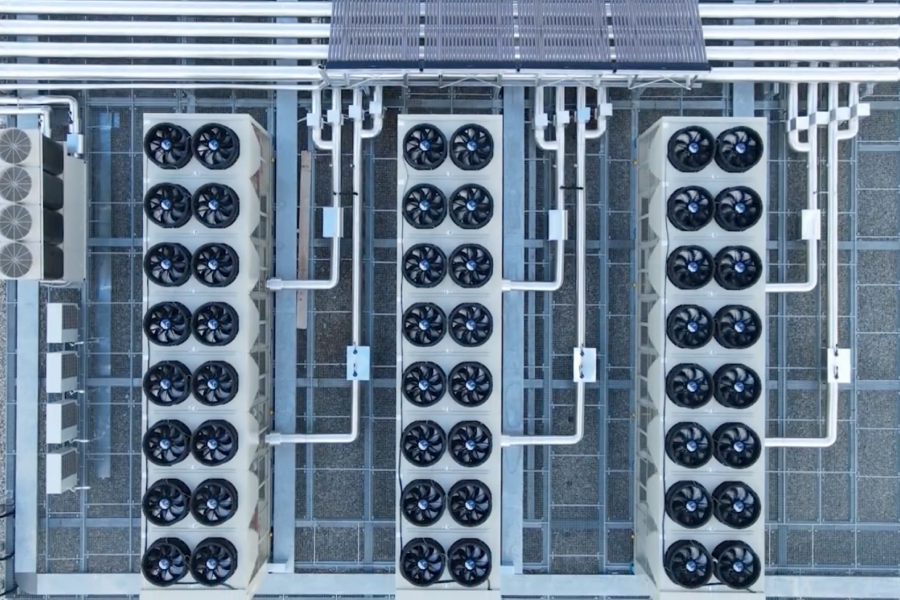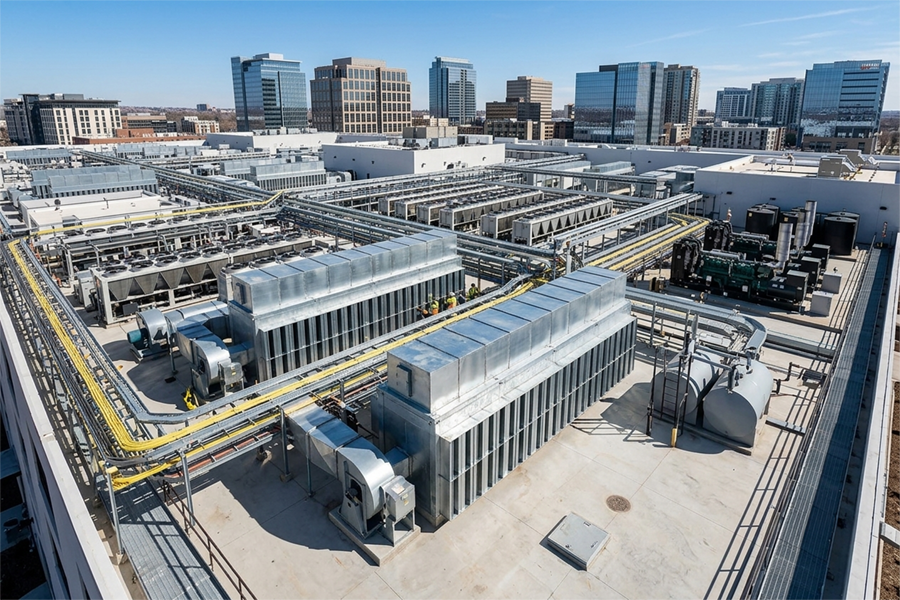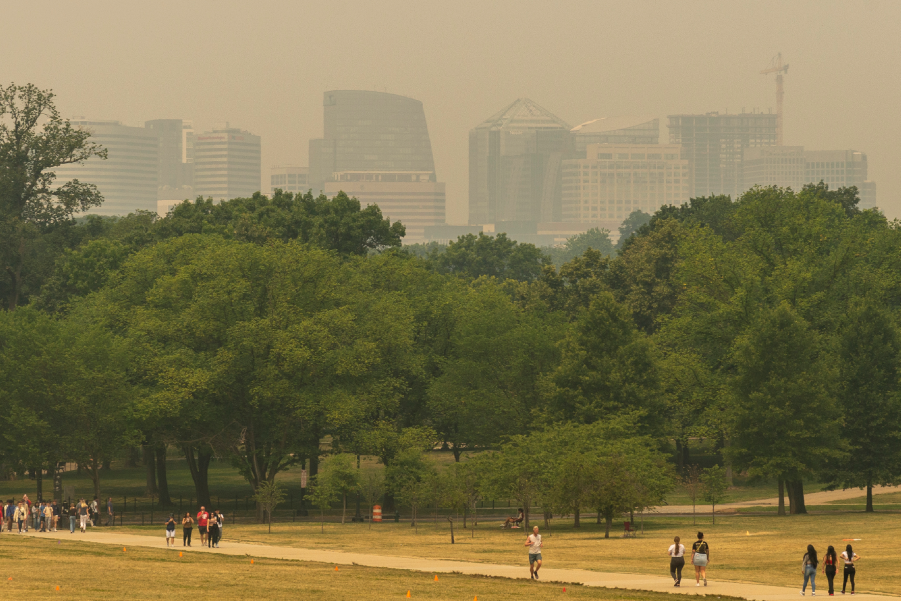
With wildfire smoke affecting outdoor air quality across our region, building teams are evaluating how outdoor contaminants may affect the air inside their facilities.
Wildfire smoke contains fine particulate matter, including PM2.5, that can enter buildings through outdoor-air intakes, doors, and building-envelope leakage. The indoor impact depends on the building, HVAC design, filtration, controls, pressure relationships, and system operation.
No single technology addresses every condition. However, three HVAC design strategies can help buildings become more resilient during smoke events.
Evaluate the Indoor Air Quality Procedure
The Indoor Air Quality Procedure (IAQP) in ASHRAE Standard 62.1 focuses on identified contaminants of concern and the methods used to control them.
During wildfire-smoke events, carbon dioxide measurements do not indicate indoor PM2.5 levels or overall indoor air quality. As ASHRAE states, indoor CO₂ concentrations are not overall indicators of IAQ.
CO₂ can still provide useful information about occupancy-related ventilation. It should not, however, be treated as a complete measure of the contaminants present in a building.
For the right project, IAQP supports indoor air quality goals while also helping project teams evaluate outdoor-air loads, equipment sizing, and operating costs.
Require Applicable Air-Cleaning Test Data
Air-cleaning technologies should be evaluated using test methods that apply to the contaminant and technology being considered.
ASHRAE Standard 52.2 evaluates particle-removal performance. ASHRAE Standard 145.2 addresses gas-phase air-cleaning devices. These standards provide useful performance data, but test results should be reviewed in the context of the proposed application.
Before selecting a technology, ask for applicable test data and consider:
- Airflow and operating conditions
- Particle or gas-removal performance
- Pressure drop and energy implications
- Maintenance and replacement requirements
- System integration and controls
Product claims alone are not enough. The goal is to understand how the technology was tested and how it is expected to perform as part of the building’s complete HVAC system.
Coordinate System Selection, Controls, and Operation
Wildfire-smoke resilience depends on more than installing a filter or air-cleaning device.
Ventilation, filtration, air cleaning, controls, building pressure, and maintenance must work together. The appropriate approach will vary based on system type, occupancy, existing equipment, and operating priorities.
Working with an experienced local team can help building owners, engineers, and facility professionals review performance data, compare options, and make sure the selected approach can be properly installed, controlled, and maintained.
Havtech has supported IAQP design in hundreds of commercial buildings across the region. That experience helps our team evaluate each building as a system rather than treating air cleaning as a stand-alone equipment decision.
Improving smoke resilience starts with understanding the contaminants of concern and how the building responds when outdoor conditions decline. Havtech can help your team review its current ventilation and air-cleaning approach and identify practical next steps.
About the Author
Tim Dorman is the Innovative Solutions Director at Havtech. He brings deep expertise in Indoor Environmental Quality and HVAC system design, helping clients implement smarter, more efficient mechanical solutions. Known for his collaborative approach and technical insight, Tim is a trusted advisor across the building industry.

Tim Dorman
Innovative Solutions Director
Havtech
References
- CBS News, coverage of Canadian wildfire smoke and regional outdoor air quality
- ASHRAE Position Document on Indoor Carbon Dioxide
- ASHRAE Position Document on Filtration and Air Cleaning