Air Cleaning Technology for Schools: What to Verify for ASHRAE 62.1 & IAQP Compliance

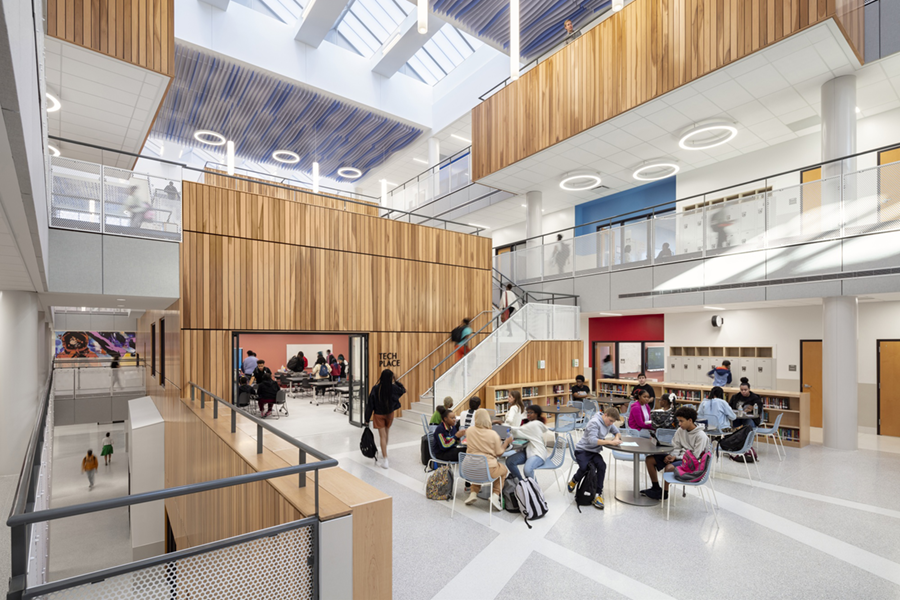
A spacious, modern school atrium with wood paneling, large skylights, students seated at tables, and others walking or talking in a bright, open environment.

Schools need better indoor air quality. The harder question is how to improve it without overloading existing HVAC systems or chasing the wrong solution.

Many school buildings were designed years ago. Now facility teams are being asked to improve air quality within the constraints of existing HVAC systems, budgets, and maintenance resources.

Air cleaning technologies can help. Under ASHRAE Standard 62.1’s Indoor Air Quality Procedure, the right approach can support indoor air quality while also reducing outside air requirements, lowering operating costs, and easing the system load.

There is no shortage of air cleaning options. The harder part is knowing which ones are backed by credible data. Not every technology is tested, documented, or specified the same way, and there is a lot of misinformation in the market about what should be used.

This article explains what to look for, which standards matter, and how to make more informed decisions for school applications.

“IAQ upgrades can improve learning outcomes and mitigate the risk of airborne transmission within educational environments.”  
– ASHRAE TC 9.7 Design Guidance for Education Facilities, v2.0

What is Air Cleaning Technology? Why Schools Need It.

Air cleaning technology refers to filters and devices used to remove contaminants from indoor air, including particulate matter, volatile organic compounds (VOCs), and carbon dioxide.

For schools using IAQP, verified air cleaners can make it possible to reduce outdoor air intake while still maintaining healthy indoor air. That not only improves the learning environment but also helps lower utility bills and extend equipment life.

On new construction or major renovation projects, IAQP may also help reduce upfront system and capital costs.
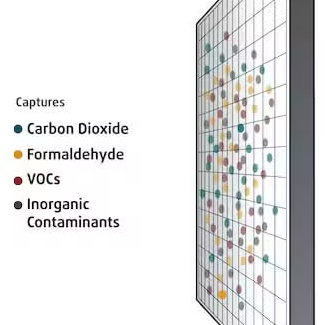
 

Diagram showing molecular filtration capturing carbon dioxide, formaldehyde, VOCs, and inorganic contaminants from air
Molecular filtration can capture a range of gaseous contaminants including VOCs and formaldehyde. Source: enVerid

Where Standards Require Proof, Not Just Claims

Before selecting equipment, school districts need to confirm that an air cleaning technology meets recognized standards. That is one of the most important steps in reducing risk during design and specification.

School districts should require documentation for the following:

  • ASHRAE 145.2 or iso 10121-2 testing for gas-phase filtration technologies to verify pollutant removal effectiveness.
  • Ul 900 certification that meet fire safety standards in the international mechanical code and NFPA 90a.
  • Ul 2998 certification to confirm that electronic air cleaners do not produce harmful byproducts such as ozone.

ASHRAE TC 9.7 Design Guidance for Education Facilities also identifies MERV 13 as the minimum recommended filtration level for improving indoor air quality in schools.

If a manufacturer cannot provide this documentation, the risk does not disappear. It shifts to the school district and the engineers approving the design.

Sorbent Filter
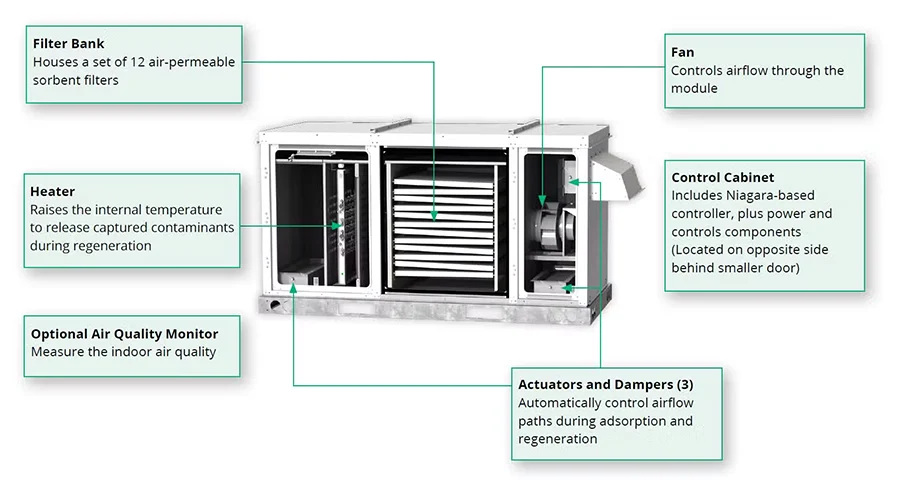
Sorbent air cleaning unit diagram showing filter bank, fan, heater, dampers, and control cabinet for HVAC systems
Sorbent air cleaning unit showing major components used to remove gaseous contaminants from HVAC airflow. Source: enVerid

What to Verify Before Selecting Air Cleaning Technology

1. Has the device been third party tested to ASHRAE Standard 145.2 or ISO 10121-2?
Without testing to one of these standards, pollutant removal performance cannot be verified.

Tip: Request certificates of compliance early. If the equipment fails post-construction testing, correcting the issue later may require costly disruption.

2. Is the air cleaning device UL 900 certified?
UL 900 helps confirm the product meets fire safety requirements referenced by the International Mechanical Code, NFPA 90A, and local building codes. Without it, the product becomes a compliance risk.

3. Does the device comply with UL 2998?
Electronic air cleaners must certify that they do not produce harmful byproducts such as ozone. Ask for written verification of UL 2998 compliance before choosing or specifying equipment.


Air Cleaning Technologies Used in Schools

Schools evaluating indoor air quality improvements may encounter several different types of air cleaning technologies. These approaches work in different ways and may address different types of contaminants.

The most common categories include:

  • Sorbent filtration – Specialized media can capture gaseous contaminants such as formaldehyde and other volatile organic compounds.
  • Molecular filtration – Designed to remove very small gaseous contaminants and odors that traditional particulate filters cannot capture.
  • Electronic air cleaning technologies – Use electrical or chemical processes to alter or remove airborne contaminants.

The table below compares air cleaning technologies used in school HVAC systems.

Factor Sorbent Filtration (Gas Phase Air Cleaning Molecular Filtration (Advanced Gas Filtration) Electronic Air Cleaning Technologies
Compliance Documentation  Typically Available Typically Available Often incomplete
Third-Party Testing & Performance Verification Verified to ASHRAE 145.2 Verified to ASHRAE 145.2 Frequently unverified
Ease of Installation in School HVAC Systems Central system or classroom systems Classroom-specific Classroom-specific
Support for IAQP Applications Strong for reduced outdoor air Limited Inconsistent
Pollutants Addressed Broad VOC and CO2 coverage May require carbon filter for full VOC coverage; no CO₂ VOC coverage is often incomplete or unverified
Filter Replacement Frequency Every 2 years Every 12 months
(with smart in-room monitoring and controls)
Replace carbon filter every 1–3 months
Unit Size and Design Flexibility Larger footprint Compact Compact, but may require frequent maintenance
Maintenance Requirements Low frequency, predictable Annual changes needed Frequent filter changes and monitoring

Sources: Based on publicly available manufacturer specifications and third-party testing results. For more information, see ASHRAE Standard 145.2-2016.

This overview highlights that while multiple air cleaning technologies exist, not all provide the same level of IAQP support or compliance assurance. Additionally, some technologies may place added burdens on school maintenance teams due to frequent filter replacements and ongoing upkeep.

Learn more about IAQP and air cleaning technologies

For a deeper technical discussion about filtration technologies and IAQ design, watch the full Havtech webinar featuring Ted Vergis from enVerid.

Watch the webinar →


Risks of Choosing the Wrong Filtration Technology

The wrong air cleaning technology does not just affect indoor air quality. It can create compliance issues, delay the project, add cost, and increase risk for the school district.

Potential consequences:

  • Compliance failures with ASHRAE 62.1 or mechanical code requirements
  • Construction delays caused by failed testing after installation
  • Added costs from redesigns, change orders, and rework
  • Liability concerns if harmful byproducts or poor air quality have an impact on student health

For school leaders, the best path is to require full compliance documentation from vendors before equipment is selected or specified.
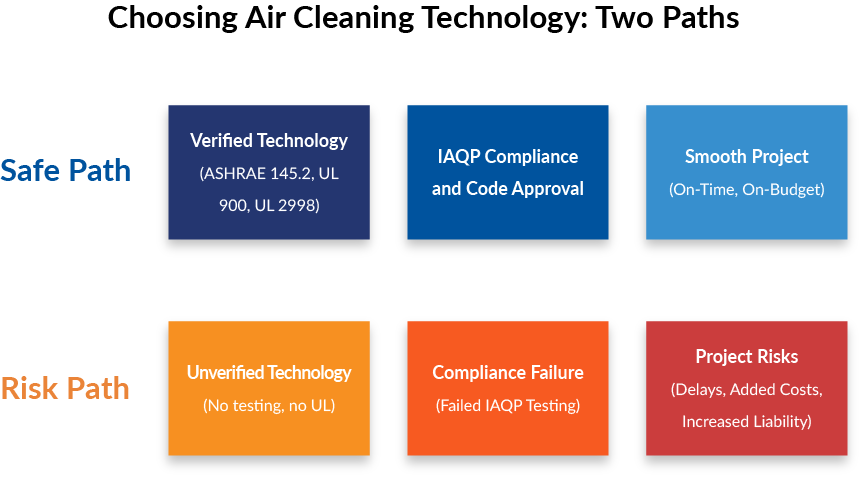

 

A flowchart compares the Safe Path—verified technology, IAQP compliance, and smooth project—to the Risk Path—unverified technology, compliance failure, and project risks.

Considers when Evaluating Air Cleaning Technology

Schools do not need more product claims. They need proof that an air cleaning technology is safe, tested, and workable in the building they already have.

That starts with five basics:

  1. No harmful byproducts
  2. UL 900 safety compliance
  3. Verified contaminant removal testing
  4. End-of-life efficiency
  5. Consistent airflow performance

Tip: A simple IAQP compliance checklist based on ASHRAE 145.2, UL 900, and UL 2998 can make product review much more straightforward.

When schools raise the standard on for documentation and accountability, they are in a better position to improve indoor air quality without creating new operational or compliance problems.


What Matters Most When Evaluating Air Cleaning Technology

Schools need indoor air quality strategies that work in the real world. That means looking beyond marketing claims and asking practical questions about performance, maintenance, compliance, and fit with the existing HVAC system.

Air cleaning technology can be part of a strong school IAQ strategy, but only when it is properly tested, documented, and specified. Clear standards and verified performance help schools make better decisions and reduce risk during design, permitting, and installation.

For most school projects, the best result comes from a solution that is not only effective on paper, but also realistic to operate and maintain in the building long term.

For Virginia school districts, indoor air quality planning may also need to align with state requirements for ventilation and air quality monitoring. Learn more about the Virginia school indoor air quality law.

This guide is informational only. School districts and design teams should review all claims against recognized ASHRAE and UL standards before specifying equipment.

Talk to a building expert

About the author
Tim Dorman is the Innovative Solutions Director at Havtech. He brings deep expertise in Indoor Environmental Quality and HVAC system design, helping clients implement smarter, more efficient mechanical solutions. Known for his collaborative approach and technical insight, Tim is a trusted advisor across the building industry. 
Tim Dorman

Tim Dorman

Innovative Solutions Director, Havtech
News & Updates from HavTech

Stay Up to Date

Tap into practical resources built by people who know what it takes to keep systems performing.

View All News

Fast Answers. Full Support. Real Results.

Get expert guidance, responsive service, and the confidence that your HVAC system is built to perform.

Talk to an HVAC Specialist