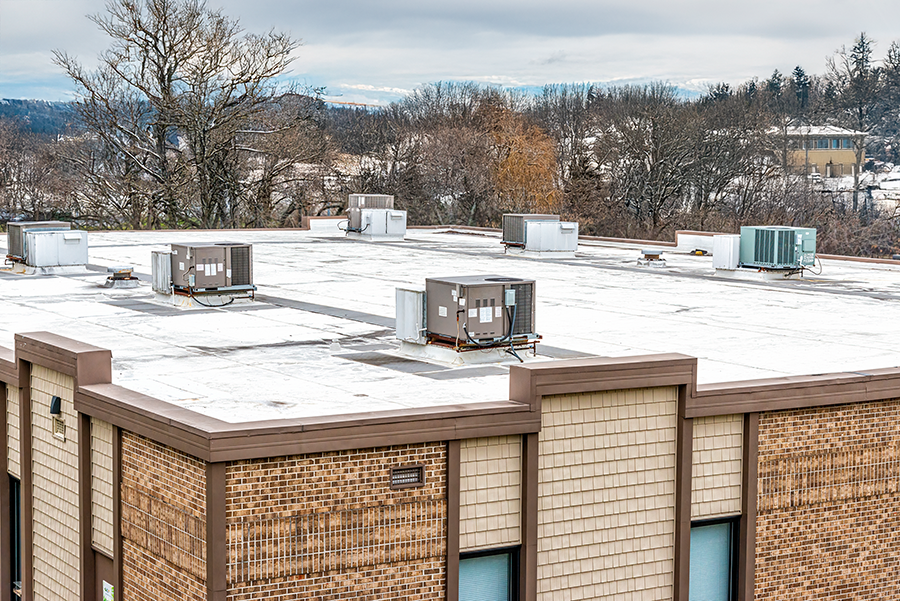
As temperatures drop, school facility directors face a familiar challenge: keeping classrooms warm, healthy, and operational all winter long. While summer brings comfort complaints and cooling failures, winter can be even more demanding, testing heating systems, freezing pipes, and limiting ventilation that affects indoor air quality (IAQ).
Earlier this year, we explored how a proactive HVAC strategy helps schools prevent costly breakdowns and improve learning environments. As winter approaches, those same principles take on new urgency. Cold weather can reveal system weaknesses, magnify deferred maintenance, and create conditions that disrupt learning.
This guide outlines practical, cost-effective steps facility teams can take right now to prepare their HVAC systems for winter and keep schools healthy, comfortable, and compliant throughout the season.
Why Winter Demands a Smarter HVAC Strategy
Winter brings more than just cold air. It exposes weaknesses in an HVAC system, especially one that’s aging or poorly maintained. Facility teams should anticipate:
- Increased heating loads and the strain placed on boilers, rooftop units, and pumps
- Risk of freezing piping, coils, and control valves
- Reduced outdoor air intake which challenges IAQ and humidity balance
- Equipment failures from worn or overworked components
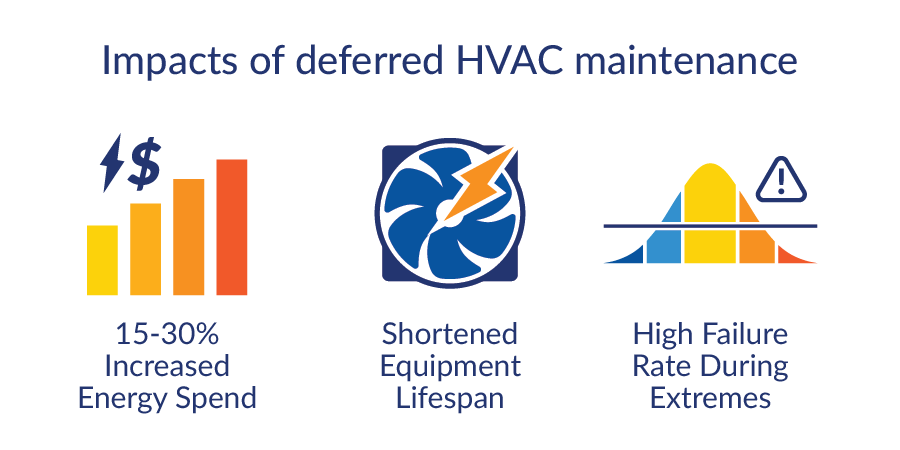
Deferred maintenance can increase HVAC energy use by 15–30% and shorten equipment life, according to the U.S. Department of Energy and ENERGY STAR.
Five Maintenance Steps to Help Prevent Failures
As colder months approach, these five steps help protect comfort, safety, and performance.
1. Inspect and Protect Heating Systems
Start with your heat-producing and hydronic components.
- Test boilers for combustion efficiency and verify safety shut-offs.
- Flush loops, confirm glycol concentration, and insulate exposed piping.
- Check air separators, pumps, and valves for leaks or corrosion.
- Inspect rooftop units for cracked heat exchangers or worn belts.
Addressing small issues now prevents mid-season outages that can close classrooms or trigger costly emergency repairs.
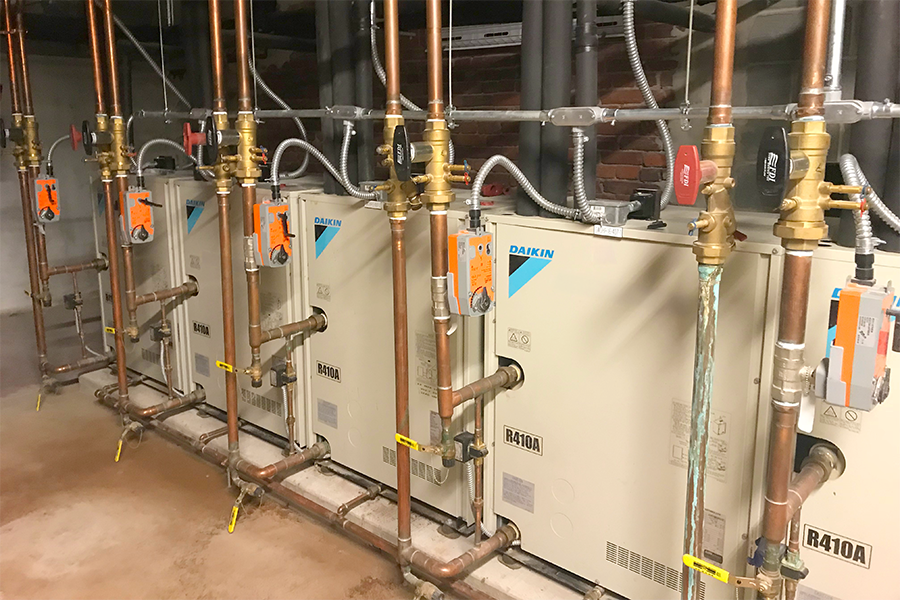
Figure 3. Water-cooled Daikin VRV condensing units in a school mechanical room. While piping insulation is not shown here, clear labeling and an organized layout support maintenance efficiency and system accessibility.
2. Test and Calibrate Controls
Winter is when control drift shows up.
- Review building automation schedules, sensor calibration, and economizer lockouts.
- Confirm that freeze-stats, damper actuators, and thermostats respond properly to changes in temperature and occupancy.
A few hours of recommissioning can dramatically reduce short-cycling, improve energy efficiency, and prevent coil freeze-ups.

3. Maintain Healthy IAQ and Humidity
Cold air holds less moisture, and reduced ventilation can degrade IAQ.
- Follow ASHRAE Standard 62.1 to maintain adequate outdoor air and humidity between 30 – 50 percent.
- Use filters and/or air cleaning technology appropriate for the system. Filters with a MERV rating that balances filtration efficiency with your equipment’s airflow capacity. In most school HVAC systems, this often means using MERV 8 to MERV 13 filters, depending on fan strength and design (ASHRAE Schools & Universities; EPA Ventilation and Air Quality in Schools).
The EPA’s “IAQ Tools for Schools” highlights that well-maintained systems directly improve student health and attendance.
Also adding demand-based ventilation sensors or smart thermostats can reduce energy waste during breaks and weekends. These tools provide a better view of system performance and help with maintenance planning and long-term budgeting.
4. Benchmark and Plan for Energy Performance
Track winter energy use through ENERGY STAR® Portfolio Manager or similar tools.
Comparing consumption against peer schools helps identify inefficiencies, justify upgrades, and support funding requests.
Consider smart thermostats, variable-frequency drives, or boiler reset controls. These are low-cost improvements that pay for themselves through lower winter utility bills.
Benchmarking also helps justify capital requests or energy-efficiency grants.
5. Confirm Your Service and Response Plan
In colder conditions, service response time matters. Review your maintenance contracts and ensure partners understand school operating hours, IAQ expectations, and local compliance requirements such as Maryland’s IAC Preventive Maintenance Task List.
A good partner should:
- Offer proactive scheduling and reporting
- Provide transparent pricing and training for in-house teams
- Be ready for rapid response when you need it most
Establishing expectations now ensures your partner can respond quickly when extreme weather hits.
Energy Savings that Justify Investment
Costly utility rates call for energy-efficient HVAC operation.
ENERGY STAR reports schools can save 10–20% annually through effective operations and maintenance practices.
Upgrades like VFDs, boiler reset controls, and demand-based ventilation can deliver measurable ROI over time.
Work with a company that can help you take advantage of energy incentives:
- State and federal grants
- Utility rebate programs
- Energy modeling that demonstrates cost savings and justifies future capital requests
An energy-smart strategy does more than reduce bills. It helps your district meet long-term sustainability goals and build the case for future upgrades.
How Havtech Commercial HVAC Solutions supports schools
Havtech partners with K-12 school districts across the Mid-Atlantic to improve HVAC system reliability, energy performance, and IAQ.
Our team helps schools:
- Plan preventive maintenance and recommissioning schedules
- Access rebates and incentive programs
- Respond quickly during critical weather events
Whether your facility team needs support for long-term planning or immediate service, Havtech provides the technical expertise and partnership schools can rely on—before, during, and after the heating season.

Mark Bailey
Vertical Market Leader, K-12 & Higher Education