If your hydronic heating system is 25 to 30 years old, or still running on pneumatic controls, limited zoning, or the original non-condensing cast iron boilers, it may be time to evaluate an upgrade. Maybe not a full system replacement; hydronic heating systems are built to last for decades, but a refresh that keeps your building running as efficiently as possible.
Schools can fall into the trap of not modernizing their aging systems out of fear of disruption. But what you don’t handle now could turn into emergency repairs, unplanned downtime, and costs that strain your budget. But modernizing your system doesn’t have to mean a major disruption. With the right plan, you can bring your hydronic heating system up to date in a way that’s aligned with your school’s schedule, your team’s capacity, and the building’s lifespan.
Why Do So Many Aging Schools Still Rely on Older Hydronic Heating Systems?
Hydronic heating systems are built to last, which is one reason many schools keep using them well past their prime. When a system is still technically running, it can be hard to justify the cost of modernizing it, especially when the school year does not stop for infrastructure projects. But after years of use, inconsistent maintenance, aging components, outdated controls, and declining efficiency can make the system harder to rely on. If those issues are left unresolved, an emergency repair may end up making the decision for you.
What Hydronic Heating Upgrades Should Schools Consider During Modernization?
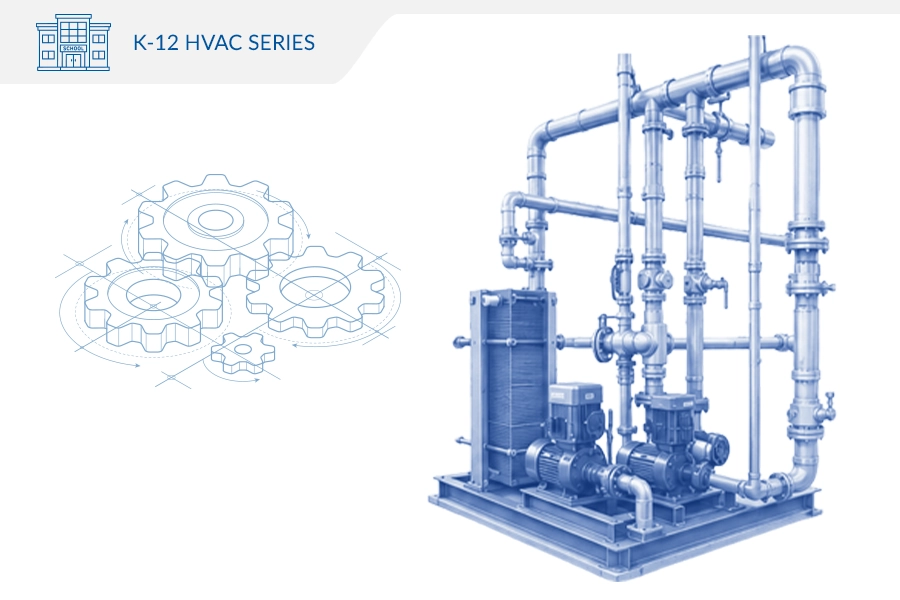
The right hydronic heating upgrades depend on what’s already in place and how much disruption your school can realistically handle. In many cases, a full replacement is not necessary. Smaller upgrades to boilers, pumps, valves, controls, or heat exchangers can improve system performance without turning modernization into a complete overhaul. That looks like:
- Boiler replacement with appropriately sized condensing equipment selected for current building loads, system water temperatures, and operating requirements.
- Controls modernization to replace outdated pneumatic or standalone controls with digital building automation.
- Pump and valve upgrades to improve flow, zoning, and overall system performance.
- Pipe insulation and distribution improvements to close efficiency gaps without major infrastructure changes.
The key is starting with a clear picture of what your system needs.
How Do You Modernize a Hydronic System Without Shutting a School Down?
Modernizing a hydronic system during the school year can be a logistical nightmare without smart planning. Many hydronic upgrades can be phased around your school’s schedule, while central plant and major piping work may require planned outages. A few things that make this possible:
- Phased project planning helps break work into stages that align with breaks, evenings, and low-occupancy periods.
- Early coordination between designers, contractors, and your facility team before work begins.
- Planned outages for tie-ins, equipment changeouts, or controls cutovers so staff know when systems may be temporarily unavailable.
What Should Facility Directors Expect From a Long-Term Hydronic Strategy?
A long-term hydronic strategy is where you figure out how your system will be maintained, how it will adapt as your building ages, and when the next round of decisions, like equipment replacements or controls updates, will happen. That kind of planning gives you more control over your budget and fewer emergency repairs.
Havtech helps you figure out where to start, what to prioritize, and how to plan for what’s next so that the process feels manageable instead of overwhelming. Let’s talk about how our hydronic heating solutions help you build a system that works.