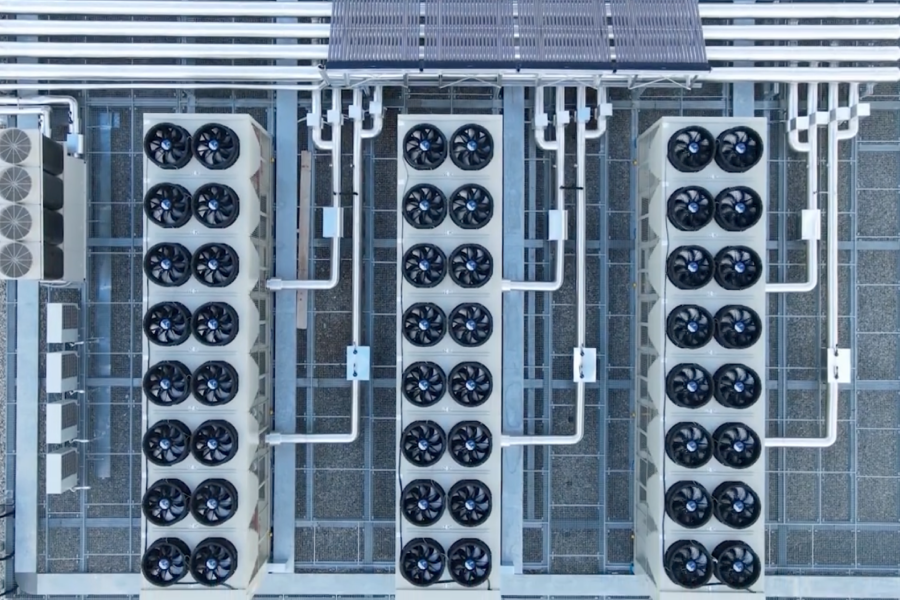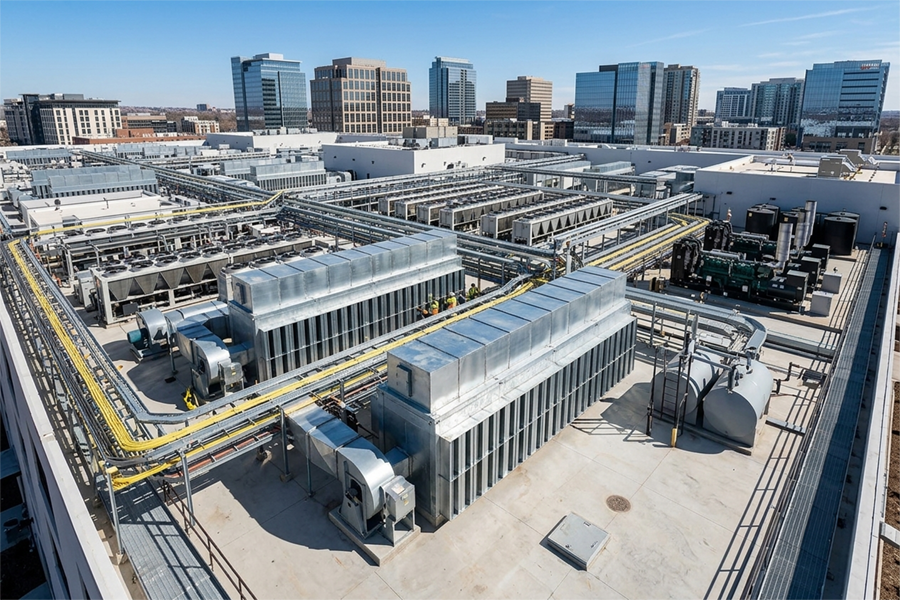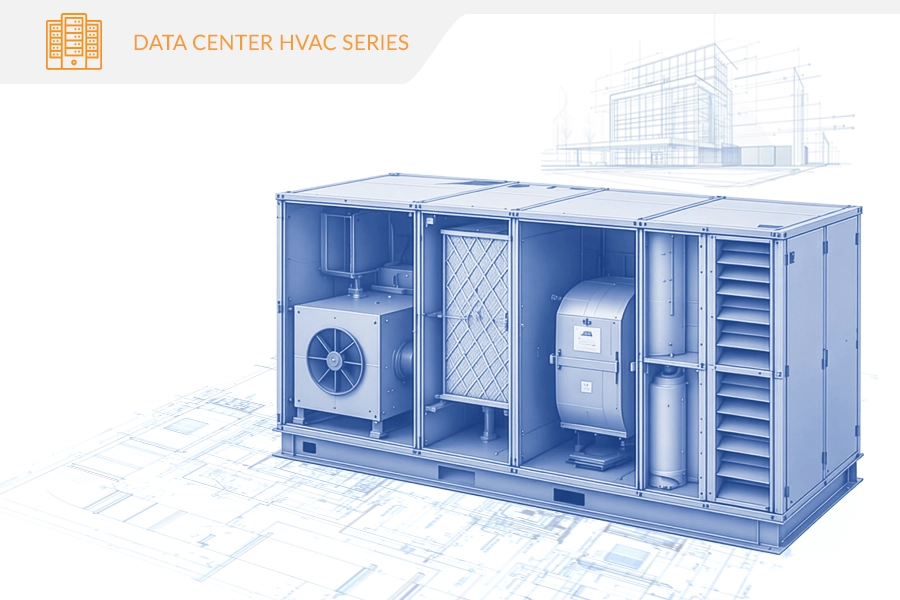
Data centers used to operate quietly in the background of society. Today, the U.S. has 1,214 operating data centers and another 1,740 planned, almost 3,000 facilities nationwide. As AI, cloud computing, and digital services continue to grow, designing facilities that can meet uptime and energy needs while leaving room for future growth is becoming more critical.
This data center HVAC design guide covers what matters most when choosing effective equipment and a cooling strategy that performs under real operational conditions.
What Design Requirements Should You Confirm Before Choosing Data Center HVAC Systems?
Data center HVAC systems can only perform well when they meet the facility’s specific operational requirements. Selecting equipment without a clear grasp on workloads, future expansion goals, and operational demands can lead to capacity limitations and costly changes later.
Before choosing HVAC equipment, confirm:
- IT load and rack density: Determine heat generation and the cooling capacity required to maintain reliable operation.
- Cooling capacity: Calculate the required cooling load to support current operations and future expansion.
- Temperature and humidity: Confirm IT equipment inlet requirements and, where applicable, liquid-cooling temperature and flow requirements.
- Airflow management: Define hot- and cold-aisle layouts and any containment needed to limit bypass air and hot-air recirculation.
- Load diversity: Account for variations in equipment usage and cooling demand throughout the facility.
- Expansion plans: Consider additional capacity requirements for planned growth and technology changes.
- Monitoring requirements: Identify controls and monitoring capabilities needed for system visibility and management.
- Future cooling needs: Consider whether higher rack densities could require rack-level or liquid cooling and what piping, power, controls, and space would be needed to support it.
How Do Reliability Requirements Shape Data Center Cooling Solutions?
In other facilities, a cooling issue might be a minor inconvenience; for data centers, it can shut down operations completely. The reliability of your data center cooling solutions needs to be engineered into the design from the start. That means selecting an appropriate redundancy strategy, such as N+1 or 2N, and confirming how cooling equipment, power, controls, and distribution will support the facility’s uptime requirements. It also means identifying and reducing single points of failure, designing for maintenance access, and aligning your design with the specific risks of your facility.
What Infrastructure Should You Evaluate Before Selecting Data Center Cooling Systems?
Even the best data center cooling systems won’t perform if the infrastructure can’t support them. Before finalizing equipment, evaluate electrical capacity and emergency power integration; chilled-water and condenser-water availability, where applicable; outdoor heat-rejection requirements; piping pathways, mechanical room and rooftop space, structural loading, equipment access, acoustical requirements, and how the cooling system will coordinate with the building systems.
Noise-control measures should also be considered early, since they can affect airflow, pressure drop, equipment layout, and service access.
Each of these infrastructure pieces determines whether your choice is effective and how it fits into your sustainability strategy.
How Can Data Center HVAC Design Support Sustainability?
The average data center power use effectiveness (PUE) is 1.52, according to the Uptime Institute’s 2026 Global Data Center Survey. Cooling design plays an important role in improving that performance. Modular and scalable HVAC systems help facilities match cooling capacity to changing IT loads, while controls, monitoring, airflow management, and equipment sequencing can help reduce unnecessary energy use.
Compare energy use, water use, and heat-rejection requirements alongside lifecycle costs when selecting equipment.
Ready to work through your data center HVAC design? Talk to our experts about cooling strategies and equipment selection for your facility.