School heating systems aren’t a choose-one-and-done commitment. Your choice will be the difference between your team easily maintaining, troubleshooting, and working with it, or one that gives them an operational headache. A system you may rely on for 20- to 30-years requires more than just picking the most efficient option. It requires balancing energy efficiency, installation timelines, and what your team can realistically maintain long term.
Here’s what you need to keep in mind to find that perfect balance.
Why Are Heating Systems for Schools Harder to Get Right Than Most Buildings?
According to the U.S. Department of Energy, K-12 school districts spend nearly $8 billion annually on energy costs, making it the second largest expense after teacher salaries. That’s $8 billion reasons to be strategic about choosing and properly maintaining your school heating systems. But cost is only part of the challenge. Heating systems for schools have to account for tight installation windows, aging infrastructure, strict ventilation and indoor air quality requirements, and budgets that aren’t always big enough to meet facility needs.
Factor in that classrooms, gyms, cafeterias, and common areas all have different comfort and ventilation demands, and it’s easy to end up with a system that can’t keep up with what the building demands. That’s why understanding your options and their tradeoffs matters before you commit.
What School Heating Systems Are Most Common, and What Are the Tradeoffs?
There aren’t standard school heating systems that you can blindly choose from a catalogue. Different systems have different strengths, and the right fit comes down to your building’s unique story. What’s your building’s size? Age? Layout? What’s your installation timeline and team’s scope?
Common options include the systems below, some of which can work together. For example, classroom unit ventilators may use hydronic heating, while packaged rooftop systems may use heat pumps.
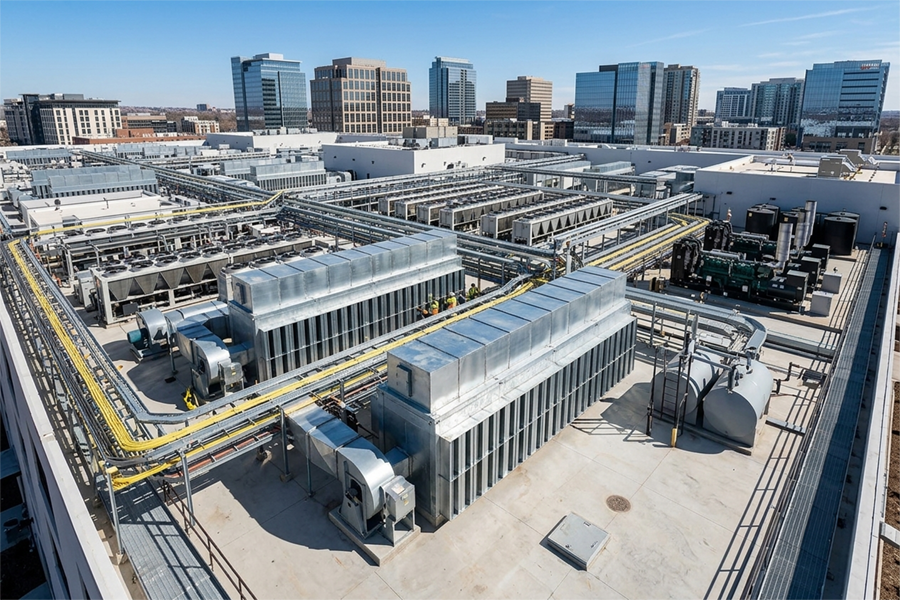
- Packaged Rooftop Systems: A practical choice for many school buildings, particularly where existing roof supports, ductwork, and utility connections can accommodate the equipment.
- Hydronic Systems: A good option for schools where centralized heating and zoning flexibility fit the building’s layout, existing infrastructure, and long-term operating strategy.
- Unit Ventilators and Classroom systems: Individual classroom systems can provide zone-level temperature control and allow facility teams to respond to the needs of specific spaces.
- Heat pump systems: Air-source, water-source, and geothermal heat pumps can provide heating and cooling in one system, with the right application depending on climate, infrastructure, and building requirements.
Each of these systems can be the right fit for your building in the right context. The tradeoffs show up when a system is chosen for the wrong building, installed outside of the ideal timeline, or handed off to a team without the proper staffing or resources to maintain it.
Some schools also use a dedicated outdoor air system (DOAS) to handle ventilation separately from space heating and cooling.
How Do You Balance Energy Efficiency and Installation Timelines When Choosing a System?
Choosing an energy-efficient system also means planning for installation and your team’s ability to maintain it. Major HVAC upgrades and replacements are often scheduled during summer breaks, and that timeframe is shorter than you may think. When you’re coordinating work for contractors and the controls team, the time between the last day of school and the first day back can feel like a sprint. Equipment lead times, controls integration, and commissioning also need to fit the schedule.
Energy efficiency is important, but it’s only one part of selecting the right system. The equipment also needs to fit your installation timeline, building conditions, budget, and the maintenance capabilities of your team.
How Do You Build a Maintenance Plan That Keeps Up With Your System?
Building an effective maintenance plan starts with understanding what your system demands and how your team can meet them. That includes thinking through service access, filter schedules, controls maintenance, water treatment if needed, and parts availability well before the system is installed.
From there, you can assess what needs to be addressed now, what you need to keep an eye on, and what your budget can cover. Creating a strong maintenance plan with an expert helps you get there faster. If you need help with building a maintenance plan that fits your system, empowers your team, and supports your long-term goal, contact a Havtech HVAC expert.