$500,000. That’s how much one school district saved when they implemented a preventive maintenance plan, according to the EPA. For other K–12 facilities looking to reduce operating costs, maintenance is an important part of how HVAC systems are planned and invested in. When it’s time to upgrade or replace equipment, consider how easily your team can maintain the next system.
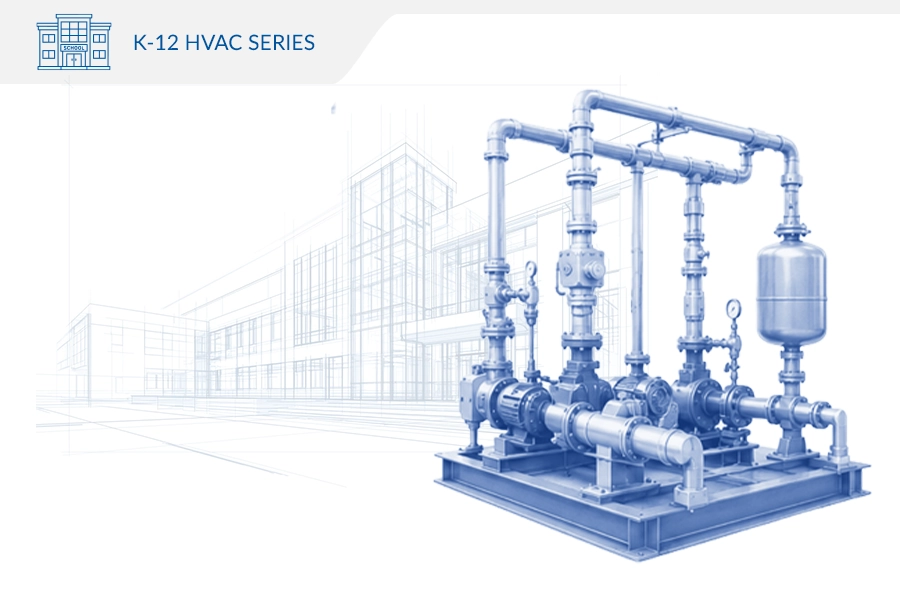
For K-12 facilities looking at long-term HVAC performance, hydronic systems are worth considering. Their flexibility and long service life can make them a good fit for schools that want a system they can maintain, adapt, and plan around over time.
What Makes a Hydronic HVAC System a Good Long-Term Investment for Schools?
Longevity. A Hydronic HVAC system built around your building’s actual needs, supported by a consistent maintenance routine and the right controls, can serve a school for decades. Individual components have different service lives and may need replacement along the way. Paired with a strong service plan, that foundation can keep your school comfortable enough for students and staff to focus and reliable enough for your team to plan around.
How Do Hydronic HVAC Systems Hold Up Against the Demands of a School Building?
Maintaining a school building isn’t simple. Classrooms, gyms, cafeterias, offices, and common areas all operate on different schedules. That can complicate the balancing act of meeting the ventilation needs of all those spaces at the same time. The right hydronic HVAC system can help you maintain consistent comfort and temperature across those areas, giving your team more control over how different spaces are conditioned throughout the day.
That said, an HVAC hydronic system is one component of a heating and cooling strategy. Ventilation, humidity, control, filtration, and indoor air quality still need to be factored into your plan to keep the whole building operating efficiently.
What Are the Operational and Financial Benefits K-12 Facilities Are Seeing?
You’re either managing your building, or the building is managing you. For facility directors, that usually comes down to how predictable your systems are. When a hydronic HVAC is predictable, you can plan for what’s coming instead of being bogged down by reactive repairs.
Those benefits don’t come from the system alone. They come from implementing a strategy that has thoughtful design, proper HVAC commissioning, a solid maintenance plan, and insight into how your building operates day in and day out. The facilities that get to reap these benefits are the ones that plan for all of these factors before choosing a hydronic HVAC system.
What Should Facility Directors Know Before Making the Investment?
The right question isn’t whether or not a Hydronic HVAC system is a good investment, but whether it fits the unique needs of your building and aligns with your long-term operational goals. Before choosing your next system, thoroughly assess the conditions of your school. That includes existing infrastructure, available budget, controls needs, installation timing, water treatment requirements, access for maintenance, and your team’s capacity to operate and maintain the system. If the system includes a cooling tower, also consider water use and tower location. That’s how you know if the investment will meet the demands of your building, year after year.
Thinking about a hydronic HVAC system for your school? Contact our experts and let them help you find one that fits your long-term building strategy.